


How Electronics Affect Sleep (And Why Your Bedroom Is the Problem)
Written by: Gabrielle Talan
Gabrielle, a former insomniac turned sleep writer and editor, brings over a decade of content expertise to her work. For the past 4 years, she's focused exclusively on sleep topics – a happy choice that helps give her the deep and restful sleep she craves.
Does this sound familiar? You stopped looking at your phone an hour before bed, and yet you still woke up at 2 AM and dragged yourself through the next day. You followed expert advice on capping your screen time, but now you're asking yourself: "Why didn't it work?"
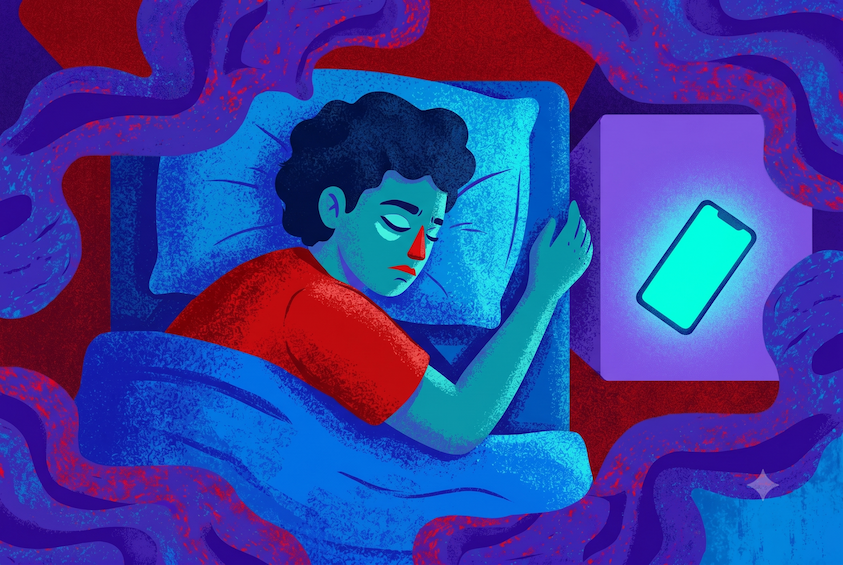
How electronics affect sleep isn't just about what you do an hour before bedtime. It's about what's in your bedroom at all times, such as a charging phone on your nightstand, the TV on standby or the router blinking in the corner. Each one keeps your brain from fully switching off.
This article maps which devices cause the most sleep disruption, why the real culprit might be your bedroom environment and what you can do about it tonight to reclaim healthy sleep.
Key Takeaways
-
Electronics disrupt sleep because they emit blue light that suppresses melatonin production, cause psychological arousal from suspenseful content, and give off ambient light that stays on even when screens go off.
-
Device use too close to bedtime doesn't just delay sleep onset. Leaving a TV on or letting device light indicators glow silently fragments your sleep cycles and deprives you of deep, restorative REM sleep.
-
Removing your phone from the bedroom is the most impactful change you can make, while a blackout sleep mask shields you from the ambient light you can't control.
Table of Contents
Why Electronic Devices Disrupt Sleep (And It's Not Just Blue Light)
Blue light is known to disturb sleep by suppressing melatonin, the sleep hormone that helps you wind down for bed. Furthermore, a major study by AlShareef published in Sleep Science, surveying over 10,000 adults, revealed that people who use devices at bedtime are significantly more likely to face delayed sleep onset and overall "bad" sleep quality.(1)
Blue light (short-wavelength light) is only one of three mechanisms that disrupt your sleep. The second is psychological arousal, which is when you scroll or game before bed. This activates your nervous system and makes you stay alert long after you stop looking at the screen. The third is ambient light. Even after putting your phone face down and turning off your television standby lights, charging indicators and router LEDs continue sending light signals.
Your brain was designed to constantly monitor light, which makes sense because for most of human history, light meant daytime. Understanding your circadian rhythm, also known as your 24-hour internal clock, explains why even low-level light at the wrong time impacts your entire sleep-wake cycle.
Research published in Sleep Advances confirms that short-wavelength light exposure before bed significantly suppresses melatonin production. Fortunately, filtering this light in the hours before bed can effectively improve sleep efficiency and total sleep time.(2)
Diagram showing three ways electronics affect sleep: blue light suppresses melatonin, mental arousal causes a cortisol spike, and ambient light triggers micro-arousals and fragmented sleep.
The Bedroom Electronics Audit (What's Actually Keeping You Awake)
If you've toned down screen time and still wake up, your bedroom environment is the part that needs work. Here's a disruption ranking from highest to lowest impact.
-
Active screen time in bed, such as scrolling, gaming and texting, has the combined effects of blue light and psychological arousal.
-
Falling asleep with the TV on still exposes you to ambient light and audio that your brain continues to process throughout the night.
-
Placing your phone on the nightstand causes micro-arousals from the glow of notifications and vibrations. These cause micro-awakenings that fragment your sleep without you remembering them.
-
Router and charger indicators are low-level but continuous, meaning your bedroom never fully darkens.
That same study by AlShareef associates regular use of nearly all electronic devices with worse sleep quality. The use of smartphones specifically is linked to taking more than 30 minutes to fall asleep.
Run a light-source audit: Turn off every light source in your bedroom and wait two minutes. You'll likely find three to five you've been unknowingly sleeping with every night.
Not All Screens Are Equal: Mapping Bedtime Disruption
The data speaks for itself: tech and good sleep just don’t mix. An extensive umbrella review published in the International Journal of Environmental Research and Public Health, covering 127 studies and over 867,000 young participants, confirmed a clear link between digital device use and severe sleep disruption.(3)
If you find eliminating all electronics before bed unrealistic, a helpful boundary line emerges from AlShareef's research. While nearly all devices in that study impacted overall sleep quality, handheld screens carried a higher penalty for falling asleep, with smartphones and tablets uniquely linked to taking over half an hour to drift off.
Watching TV in bed sits somewhere in between. Binge-watching primarily affects sleep by delaying sleep onset and increasing mental alertness. It's not just the blue light. The suspense from the narrative can cause cognitive stimulation, making it incredibly hard for your brain to wind down when you finally turn the TV off.
How Technology Use Disrupts Your Sleep Cycles (Not Just Falling Asleep)
Leaving the TV on at night doesn't just cause difficulties falling asleep. It also disrupts the structure of your entire sleep cycle. REM sleep, the stage critical for memory and emotional regulation, is especially vulnerable to light and sound. Ambient TV noise increases cycling into lighter stages, reducing the continuity and duration of REM.
This is one explanation as to why restless sleepers wake up multiple times without an obvious trigger. Your body needs to cycle through sleep stages without interruption. Sound or ambient light, however subtle, can push you back toward lighter sleep, depriving you of more restorative deep sleep stages.
The good news? These disruptions are entirely within your control because your environment drives them. A twin study published in SLEEP found that the link between problematic tech use and poor sleep holds even in the context of genetics and upbringing. Researchers showed this disruption isn't hardwired into DNA by comparing identical twins.(4) This confirms that your unique digital habits are a direct, independent threat to your sleep quality, and it's something you have the power to change.
How to Create a Device-Free Bedroom That Actually Works
The goal isn't perfection. It's prioritizing the highest-impact changes first. Here's a three-tiered strategy that'll help you remove tech distractions, so you can finally get a good night's sleep:
Tier 1: Move It Out Tonight
It might seem difficult at first, but removing your phone from the bedroom at night is the highest-impact change you can make. Consider moving it to a hallway charger and use a standalone alarm clock instead. This eliminates blue light, notifications and the psychological pull of a phone within reach in a single step.
Tier 2: Cover the Standby Lights
If you can't move your devices, cover their indicator lights with blackout stickers. Remember to run the lights-out audit beforehand, so you know exactly what you need to conceal.
Tier 3: Total Darkness as the Last Line
Let's face it. Even after tiers 1 and 2, some light is uncontrollable, such as streetlights or a partner's phone. One way to make your bedroom darker is to use an excellent sleep mask, a practical and effective solution.
Manta PRO Sleep Mask is engineered for the restless sleeper who sleeps on their side (or any other sleeping position). This fully adjustable sleep mask offers 100% blackout and C-shaped eye cups to create an effective light seal while keeping pressure off your eyes.
Sleep Hygiene for the Real World
Let's be real. Not everyone can banish all devices from their bedroom. Managing device habits is far more doable than cutting out tech entirely. Here are some tips:
Stop actively looking at your screen 45 to 60 minutes before bedtime. Make it part of your routine because staying consistent matters more than hitting an exact number every night.
While it doesn't work for everyone, some people wind down faster with passive audio or a white noise machine to help mask disruptive environmental noise like your partner's snoring.
Activating night mode while using your screens closer to bedtime isn't enough. If you must use screens, reduce overall screen brightness to the absolute minimum.
If you share a bedroom, agree on a phone-charging location outside the room where possible. If not, put your phones face-down and on sleep mode. If you can't see eye to eye on light, a sleep mask is the practical answer.
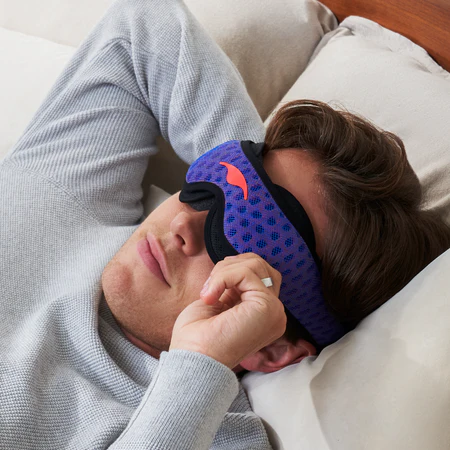
"I’m an early riser and my wife is a night owl. We never agreed about lights out and devices off when I was ready to sleep. The Manta Pro is a game changer - total blackout so I can fall asleep when she is still up, comfortable to wear. Very happy with my purchase!"
– Steve J.
Conclusion
Electronics don't just change how you spend your evenings. They can change the environment you sleep in, often without you realizing it.
Identify the light sources in your room by turning off every light and waiting two minutes to uncover those you're unaware of. Then, move or cover what you can. For the light you can't control, total darkness is one sleep mask away.
Frequently Asked Questions About How Electronics Affect Sleep
Do Electronics in the Bedroom Affect Sleep Even if I'm Not Using Them?
Yes, they affect sleep even if you're not using them. Charging phones, standby lights and router indicators can emit dim light, triggering micro-arousals that send the brain back toward lighter sleep stages. Charge devices outside the bedroom and cover remaining indicator lights.
How Long Before Bed Should I Stop Using Electronics?
You should stop using electronics 45 to 60 minutes before bedtime for active use, such as scrolling, gaming and texting. Passive audio still has an impact but to a lesser extent, so it can continue closer to bedtime. Make capping screen time a habit. Consistency matters more than hitting an exact number.
Can a Sleep Mask Help If I Have Electronics in My Bedroom?
Yes, a sleep mask can help, especially for ambient light you can't eliminate. A 100% blackout sleep mask blocks residual light regardless of internal and external light sources.
Is Watching TV in Bed Worse Than Using a Phone?
In general, active phone use, like scrolling or gaming, is more disruptive due to higher blue-light intensity and cognitive arousal. However, leaving the television on all night is also harmful because ambient light and audio cause micro-awakenings, disrupting your sleep cycle throughout the night.
What Is the Single Most Impactful Change I Can Make?
The most impactful change is to move your phone outside the bedroom. Doing so eliminates blue light exposure, notification interruptions and ambient glow. If you're worried about waking up in the morning at the right time, use a standalone alarm clock instead.
Sources:
(1) AlShareef, S. M. “The Association Between Electronic Device Use at Bedtime and Sleep Quality Among Adults.” Sleep Science, pmc.ncbi.nlm.nih.gov/articles/PMC8906383/. Accessed 8 June 2026.
(2) Shechter, A., Quispe, K. A., Mizhquiri Barbecho, J. S., Slater, C., & Falzon, L. “Interventions to Reduce Short-Wavelength (“Blue”) Light Exposure at Night and Their Effects on Sleep: A Systematic Review and Meta-Analysis.” Sleep Advances, pmc.ncbi.nlm.nih.gov/articles/PMC10127364/. Accessed 8 June 2026.
(3) Lopez-Valenciano, A., & Garcia-Gomez, M. “Digital Device Use and Sleep Disruption in Children and Adolescents: An Umbrella Review.” International Journal of Environmental Research and Public Health, pmc.ncbi.nlm.nih.gov/articles/PMC12564284/. Accessed 8 June 2026.
(4) Hubers, A. A., & Medland, S. E. “Problematic Technology Use and Sleep Quality: A Twin Study.” SLEEP, academic.oup.com/sleep/article/46/6/zsad038/7143702. Accessed 8 June 2026.
Disclaimer: The information contained in this website or provided through our blog, e-mails, or programs is for informational purposes only. It is not intended to be a substitute for medical advice, diagnosis or treatment that can be provided by your healthcare professionals.