


Why Perimenopause Wakes You at 3 a.m. (And Why It Isn't Your Cortisol)
Written by: Gabrielle Talan
Gabrielle, a former insomniac turned sleep writer and editor, brings over a decade of content expertise to her work. For the past 4 years, she's focused exclusively on sleep topics – a happy choice that helps give her the deep and restful sleep she craves.
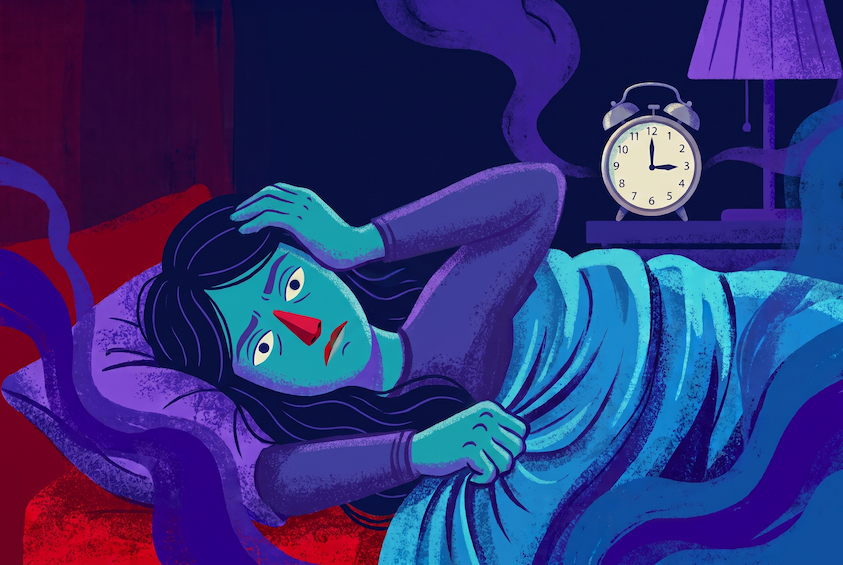
You fall asleep fine. Then you're awake at 3 a.m., alert and with hours to go.
Perimenopause waking up at 3 a.m. is one of the most common menopause sleep disturbances, and the worst explained. This isn't trouble falling asleep because it was never your issue. It's trouble staying asleep, which is a different problem with a different cause.
You've already done the obvious things. Cut the caffeine. Moved your phone out of the room. The same bedtime nightly. And yet, quality sleep remains elusive.
It doesn't help that the explanation you often read online is backwards. Almost every article blames a cortisol spike. The research points the other way.
The hour isn't random. Hormonal changes shift what it takes to wake you, and one thing in your bedroom turns out to be your most useful tool.
Key Takeaways
-
Waking at 3 a.m. in perimenopause is a threshold problem, not a cortisol problem: falling progesterone weakens your brain's primary off-switch, so things that never used to wake you now do.
-
Cortisol doesn't cause the wake-up, it follows it, which is why you feel wired at 3 a.m. instead of drowsy.
-
Because your wake-up threshold dropped, light, heat and noise affect sleep far more than at 35, and that's the part you can change tonight.
Table of Contents
What Hormonal Changes Do to Your Sleep Patterns at 3 a.m.
You wake at 3 a.m. because your brain's primary off-switch has weakened. Progesterone drops early in the menopausal transition and takes the calming compound with it. That lowers your wake-up threshold, so ordinary sounds and light now wake you up more easily.
Progesterone usually falls first. According to a study published in Physiologia, it works through a byproduct called allopregnanolone, which switches on GABA receptors.(1) GABA is your nervous system's off switch. It's the calming agent that helps you stay asleep.
When progesterone levels drop, that off switch gets unreliable. Estrogen and progesterone levels both shape your sleep patterns, but since progesterone shifts first, it moves the part that keeps you asleep.
Many women are here too. According to a review published in the Journal of Clinical Medicine, approximately 37% of women aged 40 to 55 report difficulty sleeping, and sleep disorders affect 16% to 47% of perimenopausal women, rising to 35% to 60% in menopausal women.(2)
Timing matters. Deep sleep is front-loaded into the first half of the night, so by 3 a.m. most of your deep sleep falls behind. You're in lighter sleep, which breaks easily.
Sleep-lab research published in SLEEP followed women through the menopause transition and found raised beta wave activity during non-dreaming sleep cycles, a marker of an alert brain running while it should be resting.(3) Your brain is more awake inside sleep than it used to be.
That same SLEEP analysis found that total minutes awake didn't reliably differ by transition stage. So, this isn't about more nighttime awakenings. It's about how awake you are when they happen. An awakening that once lasted 90 seconds now lasts 90 minutes, and restorative sleep never comes back.
The same hormonal shifts drive period insomnia. Perimenopause is that mechanism, except it's turned up and left on.
The Cortisol Myth: Why the Stress Hormone Isn't Waking You
Cause and effect
Cortisol Doesn’t Wake You
Follow the red line. Nothing spikes until you are already awake. The dashed line is where cortisol was heading anyway.
Perimenopause waking up at 3am: cortisol surges sharply after the awakening, not before — waking triggers the rise.
No, a cortisol spike doesn't wake you at 3 a.m. Cortisol is the stress hormone your body uses to get you going in the morning. It rises sharply in the minutes after you open your eyes. The spike is a reaction to waking up, not the trigger.
However, the size of that sharp rise depends on where you are in your circadian rhythm. Research published in Frontiers in Neuroscience shows that waking at a body-clock time of around 3:40 to 3:45 a.m. produces the biggest cortisol response of your entire day.(4) That explains why you are suddenly wide awake and wired at that hour instead of feeling sleepy.
Think of it like this. Something else wakes you: heat, a noise, or your lowered wake-up threshold. Your body then responds with the strongest hormonal surge it makes all day, because of the hour.
That's why you aren't groggy, and why telling yourself to go back to sleep does nothing. You’re fighting a wake-up signal at full volume, meaning a quick wake-up at 3 a.m. easily turns into 90 minutes of disrupted sleep.
Lowering your cortisol isn't the fix. It's doing its job. The useful question is what woke you.
Why Good Sleep Hygiene Didn't Fix Your Trouble Staying Asleep
You didn't fail at sleep hygiene. Good sleep hygiene failed at your problem.
By the time most women search this, they've put in the work: avoiding coffee after noon, keeping gadgets out of the bedroom, and sticking to a consistent bedtime even on weekends. And still, they wake up at 3 a.m.
The reason is that nearly all standard advice targets difficulty falling asleep. Your challenge is difficulty staying asleep. It's a separate problem, so the advice for the other doesn't work.
Falling asleep is about winding down. Staying asleep is about your wake-up threshold, which is how easily a sound or temperature drop can wake you. Perimenopause lowers that threshold. When your sleep patterns changed, your habits didn't fail; your biology just became much more sensitive to waking.
Many women have arrived here convinced they've become bad at sleeping. You haven't. The rules changed without you knowing it.
Three Causes of Nighttime Awakenings in Perimenopausal Women
Three causes explain most 3 a.m. waking: heat, your bedroom environment and physical changes like bladder pressure or restless legs. Each has a different impact on how you wake up, and knowing yours changes what to fix first.
Heat
As estrogen levels drop, your body has a harder time maintaining a steady body temperature overnight. The comfort band narrows, so a room that felt fine last year now wakes you up and can impair sleep quality all night.
As the Journal of Clinical Medicine review notes, these hormonal changes sit behind a large share of menopause related sleep problems.
Here's the detail that fixes the confusion. Hot flashes and night sweats, the vasomotor symptoms most people link to menopausal symptoms, often begin before you're consciously awake. That's why the wake-up feels like it came from nowhere.
If you wake up sweaty, or throw off the covers then get cold, start by addressing your temperature.
Environment
This is the part that almost everybody skips, and it's the one you can act on tonight. With a lower wake threshold, light and sound that never registered before now surface.
The streetlight. The router. Your partner turning over. None of it changed. What it takes to wake you up did.
Physical
Bladder pressure often increases in midlife, meaning a bladder that once waited until morning has become a little impatient. Restless legs syndrome, that crawling urge to move your legs, also becomes more common, and that's worth raising with a doctor.
Now it's time to test yours. Over three nights, take note of the first thing that wakes you. Is it heat? Is it sound or light? Or is it the need to go to the bathroom? Most women identify a pattern by the third night, and it tells you where to focus your effort.
How Your Bedroom Affects Sleep Quality After 40
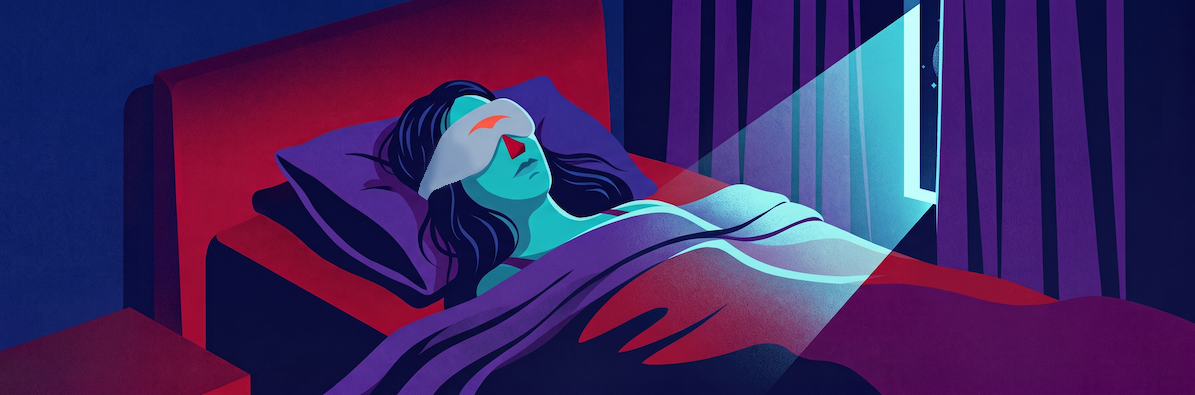
Your bedroom didn't get worse. You got more sensitive. It's not a matter of fussiness, but a natural and measurable change in how much it takes to wake you. It's why the room you slept through for a decade stopped working for your sleep.
You can't raise your hormone levels tonight. What you can do is make adjustments to your room. These changes are the ones most likely to improve sleep quality and your sleep health this week.
Light
It doesn't just wake you. It also tells your body the night is over. At 35, a sliver of light under the door was hardly a disturbance. Now it ends a wake-up that heat caused, and makes falling asleep again more difficult.
Darkness is the cheapest fix. Making your bedroom darker means hunting down the obvious light sources along with the tiny glowing ones you might normally ignore. If your room can't go fully dark, Manta Sleep Mask removes the variable entirely with eye cups that provide 100% blackout seal and zero pressure on your eyes.
Temperature
Finding the best sleep temperature doesn't mean chasing one number on the thermostat. Your comfort range has narrowed, so use layers you can shed at 3 a.m. without having to get up, like separate blankets if you have a partner, breathable bedding or a fan within reach.
Sound
Steady noise rarely wakes people, but sudden noise does, and it's what gets through a lowered wake threshold. Silence isn't the goal here. Consistent background sound gives sharp sounds less to cut through.
Morning light
This one is what you can do tomorrow. Research published in npj Women's Health looked at circadian rhythm health in midlife women and built its recommended routine around two habits: getting natural daylight within the first hour of waking, and avoiding bright and blue light for the 1 to 2 hours before bed.(5)
When Sleep Disturbances Aren't Perimenopause Symptoms
Navigating the connection between menopause and sleep is hard enough without knowing the full picture. See a doctor if waking up comes with loud snoring, gasping, morning headaches or daytime fatigue that rest doesn't fix.
Those point at something other than hormones. Ask about sleep apnea, thyroid function and ferritin, the test for your iron stores.
Manta makes sleep masks, so it's easy to say that a dark room solves everything. It doesn't, and some sleep issues need a professional.
Obstructive sleep apnea risk increases after menopause and is overlooked in women far more often than in men. In women it manifests as daytime fatigue, low mood and poor sleep rather than loud snoring. Sleep apnea and other sleep disorders are worth ruling out if nothing you change in your lifestyle or bedroom helps.
Thyroid problems and low iron are easily checked and can cause this exact pattern. Neither gets found unless somebody looks.
Appointments are short, so go in with one sentence: "I'm waking at the same time nightly and can't get back to sleep. I'd like to rule out sleep apnea, thyroid and low ferritin before we call it perimenopause symptoms."
If this has tipped into chronic insomnia or a diagnosed insomnia disorder rather than a bad week, ask about cognitive behavioral therapy for insomnia. Treatments like sleep restriction and deep breathing sound simple but are backed by real evidence; no pills required.
Depending on your perimenopausal symptoms, a doctor may also recommend hormone replacement therapy, sometimes called menopausal hormone therapy, non-hormonal medications such as selective serotonin reuptake inhibitors or serotonin norepinephrine reuptake inhibitors. They might also recommend support for mood swings, mood disorders and mental health.
Conclusion
Waking at 3 a.m. isn't a mystery and it isn't your fault. Progesterone dropped, your brain's primary off-switch got unreliable, and the disturbance it takes to wake you dropped with it.
Cortisol isn't the villain. It arrives after you're awake, at the hour it hits hardest. That's why you lie there alert instead of drifting off.
You can't negotiate with your hormones tonight. What you can do is take light, heat and noise off the table. For many women that's the difference between a 90-second stir and a 90-minute one. Start with the three-night test, find your pattern, then fix that one thing first.
If light turns out to be yours, that's the easiest fix on the list. Manta Sleep Mask gives you 100% blackout with eye cups that don’t put pressure on your eyes, so there's no light leak and nothing digging into your skin at 3 a.m. It won't touch your hormones. It takes one variable off the table, and right now it’s the one you can actually control.
Frequently Asked Questions
Why Do I Wake up at Exactly 3am Every Night?
Deep sleep is concentrated in the first half of the night, so by 3 a.m. you're in lighter sleep and easier to wake. A weakened primary off-switch lowers that bar further, so the same conditions line up at the same point in your sleep cycles.
Is Waking up at 3am a Sign of Perimenopause?
It can be, but by itself it confirms nothing. Hormonal night waking usually comes with other perimenopause symptoms: shorter menstrual cycles, night sweats and new anxiety on waking. If your cycles haven't shifted, look at other causes of trouble sleeping first.
Does a Cortisol Spike Cause Perimenopause 3am Waking?
Not in the way it's usually described. Cortisol rises as a reaction to waking rather than causing it. That response is strongest around 3:40 to 3:45 a.m. So, cortisol is likely why you can't fall back asleep. It isn't why you woke up.
Does Melatonin Help With Perimenopause 3am Waking?
Usually not much. Melatonin is a timing signal rather than a sedative, so it shifts when you feel sleepy better than it keeps you asleep. A bigger dose won't help this pattern or restore restful sleep.
How Long Does Perimenopause Insomnia Last?
It varies and tends to ease gradually after the transition rather than stopping on a set date. Some sleep disruptions continue for postmenopausal women, usually with less intensity. What doesn't expire is the sleep environment you build now.
Sources:
(1) Tamanna, S., Ullah, M. I., Iftekhar, R., & Shamsuddin, L. "Sleep Disturbances in Menopause: Neuroendocrine Mechanisms and Clinical Implications." Physiologia, mdpi.com/2673-9488/6/2/22. Accessed 23 August 2026.
(2) Troìa, L., Garassino, M., Volpicelli, A. I., et al. "Sleep Disturbance and Perimenopause: A Narrative Review." Journal of Clinical Medicine, mdpi.com/2077-0383/14/5/1479. Accessed 23 August 2026.
(3) Matthews, K. A., Lee, L., Kravitz, H. M., Joffe, H., Neal-Perry, G., Swanson, L. M., Evans, M. A., & Hall, M. H. "Influence of the Menopausal Transition on Polysomnographic Sleep Characteristics: A Longitudinal Analysis." SLEEP, academic.oup.com/sleep/article/44/11/zsab139/6291662. Accessed 23 August 2026.
(4) Bowles, N. P., et al. "The Circadian System Modulates the Cortisol Awakening Response in Humans." Frontiers in Neuroscience, frontiersin.org/journals/neuroscience/articles/10.3389/fnins.2022.995452/full. Accessed 23 August 2026.
(5) Malhan, D., Yalçin, M., Liedtke, S., Grötsch, R., Enzmann, C., Rau, M., & Relógio, A. "A Prospective Study to Investigate Circadian Rhythms as Health Indicator in Women's Aging." npj Women's Health, nature.com/articles/s44294-025-00057-z. Accessed 23 August 2026.
Disclaimer: The information contained in this website or provided through our blog, e-mails, or programs is for informational purposes only. It is not intended to be a substitute for medical advice, diagnosis or treatment that can be provided by your healthcare professionals.