


Stages of Sleep: What Is a Normal Sleep Cycle?
Written by: Gabrielle Talan
Gabrielle, a former insomniac turned sleep writer, brings over a decade of content expertise to her work. For the past 3 years, she's focused exclusively on sleep topics – a happy choice that helps give her the deep and restful sleep she craves.
You might think of sleep as simply several hours spent in a passive state of rest every night. In reality, your brain and body are busy cycling through different sleep stages, each geared toward restoring you both physically and cognitively.
Missing out on any of these stages can lower your sleep quality, harming your overall health and well-being the following day. Consistently poor sleep quality can increase your risk of health conditions, such as cardiovascular disease (heart attack and stroke), diabetes, obesity and a weak immune system, making you susceptible to illness.
Understanding your sleep cycle and its stages is the first step toward better rest. In this article, we explore the different stages of sleep, identify factors that can disrupt your sleep cycle, and discuss how to keep it on track.
Key Takeaways
-
A healthy night of sleep consists of four to six 90- to 120-minute cycles, each progressing through three NREM stages and a final REM stage.
-
The brain prioritizes NREM 3 sleep in the first half of the night for tissue growth and waste removal. In contrast, REM sleep periods lengthen as morning approaches, working to strengthen memory and creativity.
-
Consistent sleep hygiene prevents sleep fragmentation, so the brain doesn't reset to lighter stages and miss out on the restorative benefits of both deep and REM sleep.
Table of Contents
What Are the Stages of Sleep?
One sleep cycle is made up of four sleep stages. They are divided into non-REM sleep, which accounts for the first three stages, and REM sleep, which is the final, single stage.
-
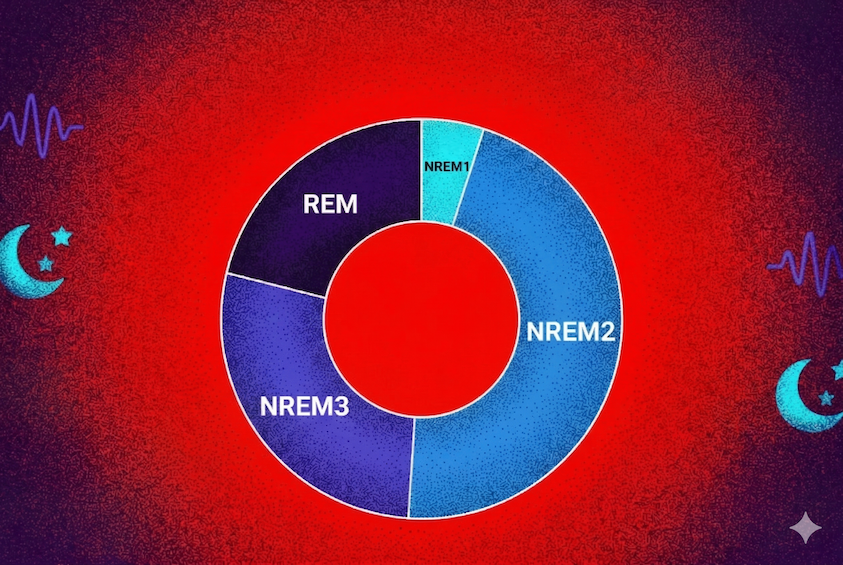
NREM 1 (Non-Rapid Eye Movement Stage 1) makes up about 5% of your total sleep time, typically lasting between 1 and 7 minutes. It's basically the time it takes for you to fall asleep.
-
NREM 2 (Non-Rapid Eye Movement Stage 2) comprises up to roughly 50% of your total sleep, at about 10 to 25 minutes per sleep cycle. While this stage is still considered light sleep, it's when your body begins to unwind in preparation for deeper stages of sleep.
-
NREM 3 (Non-Rapid Eye Movement Stage 3) is also referred to as the deep sleep stage and lasts 20 to 40 minutes per sleep cycle. It is the most restorative sleep stage, comprising up to 25% of your total sleep time.
-
Rapid Eye Movement (REM) Sleep accounts for up to 25% of your total sleep time and lasts for approximately 10 to 60 minutes. It's when the most vivid dreams occur (though dreams can also occur in other sleep stages). It's also the sleep stage wherein you're most likely to recall your dreams when you wake up in the morning.
What Is a Sleep Cycle?
The brain remains active during sleep to restore the body, remove toxins and process memories and emotions. It progresses through the four sleep stages, which make up a single sleep cycle, in the following order: NREM 1, NREM 2, NREM 3 and REM sleep.
You need to go through several sleep cycles to wake up refreshed and energized. A sleep cycle is a 90- to 120-minute loop that typically repeats four to six times per night, though this varies from person to person.
While a sleep cycle "generally" follows a linear route, that doesn't mean its length remains the same throughout the night. Your brain will prioritize deep sleep (NREM 3) during the first few cycles to focus on tissue repair and regeneration. As morning approaches, your brain prioritizes REM sleep to process memories and emotions.
Your brain may revert to a previous sleep stage when your sleep is disrupted. You may not even be aware of these micro-arousals, brief shifts in brain activity that cause your brain to restart to lighter sleep stages, potentially shortening the time spent in more restorative sleep.
What Are the Non-REM Sleep Stages?
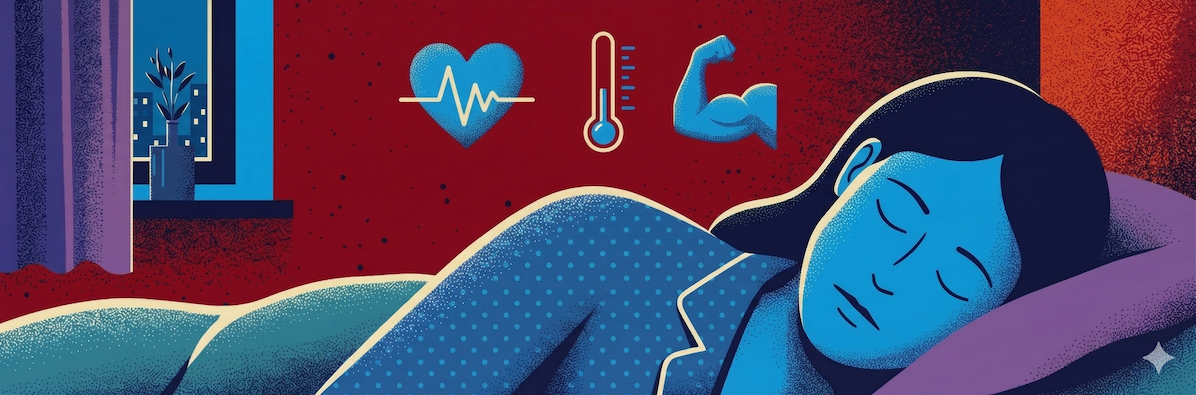
Non-REM sleep has three stages, during which your body repairs itself.
NREM 1 or Transitional Sleep
NREM 1 is considered the "transitional" sleep stage because it's when you move from wakefulness to sleep. It can also act as a buffer stage when you move from deep sleep to REM sleep, or as a "reset" point if your sleep is disturbed.
It's easy to wake up during NREM 1 sleep because you're not fully asleep yet. You might experience involuntary twitching during sleep, known as hypnic jerks or sleep starts.
NREM 1 is the shortest and lightest sleep stage. While it lacks the restorative benefits of deeper sleep, it sets the pace for the rest of the night. If you can't progress through NREM 1, you won't reach the more reparative sleep stages.
NREM 2 or Light Sleep
NREM 2 consists of deeper sleep than NREM 1. It's when memory processing occurs. You spend the most time during a sleep cycle in this sleep stage.
Your body temperature drops, and your heart rate and breathing slow as your body prepares for deep sleep.
Your brain activity mainly consists of theta waves, which are slower than wakeful brain waves but interspersed with sudden bursts of energy called sleep spindles. They enable your brain to process the day's memories and transfer them into long-term storage. These spindles also prevent your body from reacting to external noises.
NREM 3 or Deep Sleep
NREM 3 is also known as slow-wave sleep (SWS) because this is when your brain produces low-frequency, high-amplitude delta waves. Physical recovery is highest during this stage because the body releases human growth hormone (HGH), which aids tissue repair and muscle growth.
It is difficult to wake up during slow-wave sleep, and if you do, you'll likely experience extreme grogginess and disorientation, also known as sleep inertia. You might also experience parasomnias, like sleepwalking, sleep talking or night terrors.
NREM 3 occurs during the first half of the night. If you sleep late and get up too early, you'll be missing out on your body's main recovery window. Not spending enough time in NREM 3 sleep means your body can't heal properly.
A chronic lack of slow-wave sleep can eventually lead to memory loss and heart disease. SWS is when your brain's glymphatic system (waste-removal system) is most active. Research in Brain Sciences indicates that an impaired glymphatic system contributes to the risk of Alzheimer's disease by a reduced removal of the metabolic waste proteins: amyloid-beta and tau.(1)
Meanwhile, a study published in the Journal of the American College of Cardiology found that people who averaged less than 6 hours of sleep (and thus less SWS) were at a significantly higher risk of subclinical multiterritory atherosclerosis, when plaque builds up in the arteries throughout the body, acting as a silent precursor to heart disease.(2)
Why Is REM Sleep Different?

There are several reasons REM sleep differs from NREM sleep.
REM stands for rapid eye movement. Your eyes move behind closed eyelids in this sleep stage, unlike in other sleep stages, when they are still. One theory that tries to explain this phenomenon is that your eyes move to scan dream images your brain creates, while your body is paralyzed, preventing you from physically acting out your dreams.
REM sleep's goals are emotion regulation and memory integration. NREM sleep focuses on growth, detoxification and physical repair. REM is also about creativity, where your brain integrates new information with existing knowledge and translates it into new ideas.
REM sleep is characterized by high levels of acetylcholine, a neurotransmitter that supports learning and dreaming. REM also suppresses the release of norepinephrine (the stress chemical), thereby allowing your brain to process memories with less stress. Meanwhile, NREM sleep triggers the release of the human growth hormone (HGH), which supports tissue and muscle repair.
Physiologically, your heart rate and breathing quicken and become irregular during REM sleep. Your brain activity levels are nearly as high as when you're awake. Apart from your eye and respiratory muscles, your body is in a state of paralysis known as muscle atonia. There are several REM sleep periods throughout the night, with each period lengthening as morning approaches.
In contrast, during NREM sleep stages, your heart rate and breathing are slow and steady. Your brain activity levels are lower. Your body isn't paralyzed; your muscles are just relaxed but still capable of movement (which is why parasomnias can occur).
How Can Sleep Stages Be Disrupted?
Sleep disorders such as obstructive sleep apnea, insomnia, narcolepsy and REM sleep disorder can disrupt your sleep stages because they cause sleep fragmentation.
They can prevent you from completing a full sleep cycle, lead to frequent restarts into lighter sleep stages, prevent your brain from transitioning smoothly between sleep stages and reduce your sleep efficiency (the ratio of time spent sleeping to the total time you spend in bed).
-
Obstructive Sleep Apnea is when you gasp and choke for air due to breathing pauses caused by an obstruction to the airways. Low oxygen levels fragment sleep by causing you to jolt awake during NREM 3, requiring a restart to NREM 1.
-
Insomnia is when you have difficulty falling asleep and staying asleep. Even when asleep, the brain is in a state of hyperarousal – it's too alert to enter deeper sleep stages. Insomnia also fragments sleep by causing multiple awakenings.
-
Narcolepsy is an uncontrollable need to sleep during the day and the inability to stay asleep at night. It shatters sleep architecture. The brain's switch between sleep and wakefulness is unstable, leading to rapid entry into REM sleep and brief episodes of sleep fragmentation. Your brain is also unable to remain in any sleep stage long enough for healthy sleep.
-
REM Sleep Disorder, also known as REM sleep behavior disorder, is when you aren't paralyzed during REM sleep. You can physically act out your dreams, which can reset you to NREM 1 sleep or prevent you from completing REM sleep.
-
Alcohol and sleep medicine cause sedation rather than natural sleep. These substances can trap you in sleep stages, preventing you from progressing through a full sleep cycle. Alcohol can block REM sleep, which is necessary for mental and emotional health. Some sleeping pills can keep your brain in light NREM 2 sleep, depriving you of more restorative sleep.
-
Another factor is that sleep changes as you age. The brain's ability to create and maintain stable, deep sleep stages starts to diminish. NREM 3 sleep shortens and sometimes disappears. NREM 1 and 2 sleep make up most of the sleep cycle. Older adults tend to develop advanced sleep phase disorder, in which they feel tired and wake up earlier. They also experience more frequent nighttime awakenings.
-
Irregular sleep patterns can also disrupt sleep stages. When you sleep and wake at different times for extended periods, you disrupt your 24-hour internal clock (also known as the circadian rhythm), which regulates your sleep-wake cycle. This disruption reduces your brain's ability to accurately trigger sleep stages, leading to poor sleep quality. Irregular schedules can trigger REM sleep rebound, which forces your brain into longer, more intense dreaming at the expense of other restorative sleep stages.
How to Have a Healthy Sleep Cycle
The secret to a healthy sleep cycle is maintaining good sleep hygiene. Here are some strategies to try:
-
Maintain a consistent sleep schedule to sync your 24-hour internal clock, so your brain triggers the right sleep stages at the right time.
-
Expose yourself to sunlight in the morning to suppress melatonin production, so your brain triggers restorative sleep stages at the correct time in the evening.
-
Stop looking at screens 1 to 2 hours before bedtime to prevent blue light from suppressing melatonin and keeping you alert. Putting your gadgets away will help your brain transition into restorative sleep stages.
-
Avoid alcohol and caffeine before bed to allow your brain to build the natural sleep pressure required for NREM 3 repair and prevent the fragmentation of REM cycles.
-
Avoid heavy meals before bed. Digestion can raise your core temperature, preventing your body from cooling down and making it harder to enter deep sleep. Digestive discomfort can also disrupt your sleep stages.
-
Maintaining a cool, dark and quiet sleeping environment allows your core temperature to drop for deep sleep and your melatonin levels to remain high, supporting uninterrupted REM cycles. A 100% blackout sleep mask, earplugs or a white noise machine helps eliminate noise and light disruptions.
-
Get enough quality sleep with a sufficient sleep duration of 7 to 9 hours to ensure your brain completes all necessary REM sleep periods. Chronic sleep deprivation can harm your cognitive and physical health.
Conclusion
Sleep isn't a passive process. A good night's rest consists of several 90- to 120-minute sleep cycles, each comprising four stages. Three NREM stages focus on physical repair, while a single REM stage supports emotional regulation and memory integration.
You can protect your sleep stages from disruption with consistent sleep hygiene. It ensures you get the deep physical recovery, mental clarity and emotional stability you need to thrive every single day.
Frequently Asked Questions About the Stages of Sleep
How Many Sleep Stages Are There?
There are four sleep stages divided into two categories: NREM (non-rapid eye movement) and REM (rapid eye movement) sleep. NREM consists of three sleep stages: NREM 1 (the transitional sleep stage), NREM 2 (light sleep) and NREM 3 (deep or slow-wave sleep). REM is a single sleep stage during which the most vivid dreams occur.
How Long Is One Sleep Cycle?
One sleep cycle can last for 90 to 120 minutes. The length of one sleep cycle can vary from person to person.
Can You Complete a Sleep Cycle in 90 Minutes?
Yes, it is possible to complete a sleep cycle in 90 minutes.
How Long Does Each Sleep Stage Last?
The duration of each sleep stage can vary. Generally, NREM 1 lasts for about 1 to 7 minutes. NREM 2 lasts approximately 10 to 25 minutes. NREM 3 typically takes 20 to 40 minutes. Finally, REM sleep takes about 10 to 60 minutes, lengthening as the night progresses.
How Many Sleep Cycles Do You Need per Night?
A healthy adult needs four to six cycles per night for a good night's rest.
What Stage of Sleep Is Most Important?
The most important stage of sleep varies according to a person's needs. Generally, NREM 3 or slow-wave sleep is considered vital because it's the most physically restorative. REM sleep is also important because your brain needs it for cognitive functions, creativity, and emotional regulation and processing.
Can Naps Affect Sleep Cycles?
Yes, naps can affect sleep cycles, depending on their length and timing. Napping too late in the day can make it hard to fall asleep at night, disrupting your regular sleep cycle. Naps that exceed 30 minutes can lead to waking during a deeper sleep stage, such as NREM 3 or REM, leaving you feeling groggy and making it harder to drift off at night.
Sources:
(1) "The Sleeping Brain: Harnessing the Power of the Glymphatic System through Lifestyle Choices.” Brain Sciences, pmc.ncbi.nlm.nih.gov/articles/PMC7698404/. Accessed 13 March 2026.
(2) “Association of Sleep Duration and Quality With Subclinical Atherosclerosis.” Journal of the American College of Cardiology, www.sciencedirect.com/science/article/pii/S0735109718391861. Accessed 13 March 2026.
Disclaimer: The information contained in this website or provided through our blog, e-mails, or programs is for informational purposes only. It is not intended to be a substitute for medical advice, diagnosis or treatment that can be provided by your healthcare professionals.