


How to Sleep With Sensory Overload When Everything Feels Too Loud
Written by: Gabrielle Talan
Gabrielle, a former insomniac turned sleep writer and editor, brings over a decade of content expertise to her work. For the past 4 years, she's focused exclusively on sleep topics – a happy choice that helps give her the deep and restful sleep she craves.
Medically Reviewed by: Leah Kaylor, PhD, MSCP
Dr. Kaylor is a licensed clinical and prescribing psychologist and internationally recognized as the FBI's sleep expert. Her bestselling book, "If Sleep Were a Drug: The Science of Sleep Optimization," translates cutting-edge sleep science into practical strategies anyone can use.
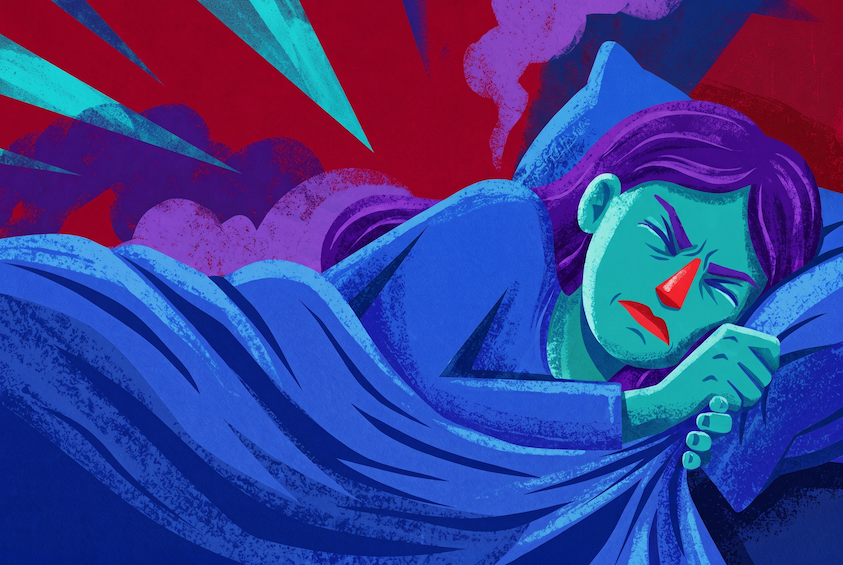
The day is over. Your room is quiet by any normal measure, and you're still feeling overwhelmed. It has a name: sensory overload.
Learning how to sleep with it begins with recognizing what sensory overload symptoms feel like. They show up in subtle ways: the fridge's hum sounds like a truck, or that thin line of streetlight through your curtains is somehow the brightest thing in the room.
You've done everything you think you need to do to wind down. A warm bath. Chamomile tea. Your phone charging in another room. None of it resolved the problem. So you've drawn a quiet, private conclusion, one that nobody says out loud: something must be wrong with you. There isn't.
The truth is your nervous system is doing something predictable, and it has little to do with a lack of discipline or willpower. You've been asked to relax in a room that's still feeding you sensory information, so it's not a mindset issue. It's a design problem.
This article offers a sequence that fixes it, one channel at a time and in an order that actually works.
Key Takeaways
-
Sensory overload makes sleep difficult because it raises your body's arousal level, which suppresses your sleep drive even while fatigue keeps building.
-
The fix is a shutdown sequence rather than a relaxation technique: remove light, then sound, then touch, then regulate the room temperature, starting 30 minutes before bed. If half an hour doesn’t work, consider starting the sequence 60 minutes before you plan to sleep.
-
If ordinary noise and light feel unbearable at night, it’s a matter of filtering rather than a discipline problem, and it responds to changing your bedroom.
Table of Contents
What Is Sensory Overload at Night?
Sensory overload occurs when your brain receives more sensory input across your five senses than it can process at once. At night, the inputs are usually small and repetitive rather than loud and obvious: a hum, a glow, a strong smell. They stack up because your brain can't filter them out.
During the day, you barely register sensory experiences. You sit in a room lit by fluorescent lights, or in a crowded space or even attend loud concerts, absorbing hundreds of small sensations, and still keep on moving. The way your brain sorts incoming information, known as sensory processing, handles these in the background.
By the time the sun sets, the same everyday situations can make you feel overwhelmed for no explainable reason. Loud noises can be culprits. It's also the tiny bright lights from a charging cable, a tight waistband or a radiator that clicks. The specific triggers are ordinary, which is why it's so hard to explain why they're so bothersome.
This is also where sensory overload is mistaken for anxiety. It’s also possible to have both. So, how can you tell if you have sensory overload? Pay attention to whether the feeling shifts when the input changes, or when the thought changes. Close your eyes, and if the tightness eases within a minute, you were dealing with input.
You don't need a diagnosis of sensory issues for any of this. Many people without health conditions simply can't tolerate their own bedroom by the end of a demanding day.
Why Sensory Overload Gets Worse After Dark
Your tolerance for sensory noise isn't set in stone. Your brain’s filter works incredibly hard for you all day long. By the time you're lying in bed, that filter is worn thin.
That's why a room that felt neutral at noon can feel hostile at 11 PM. Nothing about the room changed. What shifted is your capacity to absorb it.
There's something else happening, and it's the part sensitive sleepers rarely know about. Insomnia research published in the Journal of Sleep Research suggests people who struggle with sleep have more difficulty filtering out sensory stimulation, whether awake or asleep.(1) This leaves them at the mercy of their physical environment.
Your sensitivity isn't necessarily just a product of anxiety or stress. It may be part of how your nervous system processes the world. A study of more than 800 adults aged 18 to 85 published in Scientific Reports found that people with greater sensory processing sensitivity reported significant sleep disturbances.(2)
One more thing to note: tiredness and sleepiness aren't the same. Sensory overload raises your arousal level, and high arousal keeps you wide awake even as your fatigue increases. That's why you feel tired but can't sleep. Sleep deprivation can lead to sensory processing difficulties and negatively impact your cognition, mood and performance the following day, so protect your sleep to avoid a vicious cycle.
The Sensory Shutdown Sequence: How to Sleep With Sensory Overload Tonight
Determine what time you want to be asleep and start the sequence 30 minutes before that. Remove inputs in a deliberate order. First light, then sound, then anything touching your skin. Finally, you'll drop the temperature.
The order matters because each step gives your body a single, clear signal to wind down, rather than confusing it with changes all at once. You'll also know which change helped you create the best sleeping environment.
Here's another pre-bedtime tip: Organize your sleep space and remove unnecessary items and things that you associate with stress. This reduces the visual clutter that can increase anxiety by asking an already overstimulated brain to work harder.
Step 1: Light, 30 Minutes Out
Light goes first. Not dim, but dark. It has the biggest return for the least amount of work.
It might sound surprising, but partial darkness is an easy trap to fall into. Even with your eyes closed environmental light can still reach the retina. Research in The Journal of Clinical Endocrinology & Metabolism suggests that even standard room light before bed suppresses melatonin, the hormone that signals biological light, and shortens the duration of your body's natural nighttime melatonin signal.(3)
You have two options: make your bedroom darker, or block light from reaching your eyes. Blackout curtains work, but a 100% blackout mask is portable, costs less and doesn't need installation.
Step 2: Sound, 20 Minutes Out
You have two choices here: mask noise or get rid of it entirely. If you have a loud fridge and noisy neighbors or a creaky floor, mask it. If your room is genuinely quiet, choose silence.
The problem isn't limited to sounds loud enough to wake you. Noise can disturb sleep long before it wakes you up. An article published in Sleep Science notes that nighttime noise triggers measurable physical responses at levels below the point of waking, and most of the time the sleeper doesn't know it happened.(4)
When deciding between sleeping in silence vs with noise, it comes down to your environment. Certain types of steady, predictable sound are much easier for your brain to ignore than sudden volume spikes, which is why white noise works so well against unpredictable background sounds. You can also mask or block noise with Manta Sleep Earplugs.
If you need to mask noise and block light at the same time, a Bluetooth sleep mask tackles two steps at once. Manta SOUND Sleep Mask provides 100% blackout while letting you stream your choice of white noise or ambient sleep sounds through ultra-thin speakers.
Step 3: Touch, 10 Minutes Out
This is the step almost everyone skips, and for those with sensory sensitivities, it's often the most impactful.
Identify what's bothering you in terms of physical touch. Certain textures or fabric that felt fine this morning are unbearable now. Clothing tags. Seams. Waistbands. Scratchy sheets. These can cause unpleasant sensations that trigger sensory overload.
Weighted blankets help some people improve sleep quality and reduce anxiety. They're tricky because they can work both ways, though. Added weight calms some people and annoys others, so treat it as an experiment rather than a rule.
Step 4: Temperature Regular, at Lights Out
Heat can silently undo the other three. A mask that blocks light perfectly but traps warmth against your face will wake you at 3 AM. You'll wind up blaming the wrong thing.
Get the room to a cool temperature first, then check whatever touches your skin for breathability. Make sure your sleep mask and bedding are made from ultra-breathable materials.
The Sequence, Short Version
Thirty minutes out, get rid of light. Twenty out, decide on whether to mask noise or use earplugs. Ten out, identify and clear anything bothersome that's touching you. At lights out, cool the room. That's the bedtime routine. A 4-step sequence, one step at a time.
You might be wondering why standard advice like deep breathing isn't step one. It isn't that breathwork doesn't help. Think of it as a losing battle where you're asking your central nervous system to calm down while your sensory inputs are still firing away. Fix the room first, and falling asleep becomes less difficult.
If you find that 30 minutes isn't enough time for an effective shutdown sequence, extend it to 60 minutes.
Sensory wind–down sequence
How to Sleep With Sensory Overload: The 30–Minute Wind–Down
Shut down one sensory channel at a time, in order of impact. Start 30 minutes before you want to be asleep.
- 1
Light
30 minutes outGo fully dark, not dim — light reaches the retina through closed eyelids. Block it at your eyes with a 100% blackout sleep mask.
- 2
Sound
20 minutes outNoise disturbs sleep long before it wakes you. Mask unpredictable noise with steady white noise, or block it with earplugs — pick one.
- 3
Touch
10 minutes outThe step almost everyone skips. Clear whatever irritates your skin — tags, seams, tight waistbands, scratchy sheets.
- 4
Temperature
At lights outHeat quietly undoes the other three. Cool the room first, then check that everything touching your skin is breathable.
Trapped heat is the most common reason a “perfect” setup still fails at 3 AM — check breathability before you blame the mask.
Can Sensory Overload Cause Insomnia?
Sensory over responsiveness to environmental stimuli is linked with more severe insomnia symptoms. A study published in Stress and Health found that the link appears to run through sleep reactivity rather than through stress. It's an association rather than a proven cause.(5) For sensitive sleepers, though, the pattern is consistent enough to act on.
A reactive sleep system plus an unfiltered room can produce a succession of bad nights where it isn't just difficult to drift off. Staying asleep is also a problem. Have enough of these nights, and your body starts thinking your bedroom is a place where sleep doesn't happen.
Standard sleep hygiene, like cutting caffeine, keeping a consistent sleep schedule and avoiding late naps is all sound advice for improving sleep quality. However, solving sensory overload is about systematically shutting down the noise in your bedroom.
If sleep problems have been going on for weeks and environmental fixes haven't worked, raise it with a doctor. Not because something is wrong with you, but because effective treatments exist, and there's no need to keep guessing.
What Hospitals Do About Sensory Overload
To understand how much sensory input affects sleep, look where the impact is greatest. An intensive care unit (ICU) is probably one of the most sensory-hostile sleep environments. Bright lights on around the clock. Loud sounds like alarms and voices and regular wakeups for vital checks. Patients recover in conditions that were accidentally built to prevent rest.
So, what do clinicians suggest? Using tools like an eye mask and earplugs. A controlled trial published in the Journal of Sleep Research followed 70 intensive care patients. Half received sleep masks and earplugs for three nights alongside routine care, and the other half got routine care alone. The group who wore masks and earplugs had better sleep quality and reported less anxiety and fear.(6)
That's a finding about the room and not the patient. Remove light and sound, and sleep improves, even under conditions far worse than your bedroom. The benefit shows up in healthy sleepers too. Wearing a sleep mask overnight is linked to improved alertness and memory the following day, according to an article published in SLEEP.(7)
When Sensory Overload Is Part of Something Bigger
For some people, sensory overload isn't an occasional bad evening. It's a consistent feature of their daily life.
Sensory processing issues are commonly reported by people with autism and adult ADHD, which has its own twist. It also shows up in related conditions like sensory processing disorders, PTSD and mothers in the postpartum months.
The sensory needs differ, but the mechanisms don't. This means the shutdown sequence still applies. Remove light, sound, touch and heat, in that order. What changes is how much you need it and how consistently.
Experts are studying sensory approaches more seriously nowadays. In fact, a 2025 scoping review of 20 studies published in Frontiers in Neuroscience examined sensory stimulation as a therapy for sleep disorders, a clear sign the field treats sensory input as a biological switch rather than background interference.(8) Overall, sensory stimulation therapy had a positive impact on sleep quality, particularly in aspects such as sleep latency, total sleep time, and subjective sleep experience.
If sound sensitivities are your main hurdle, or if sensory overload feels bigger than a room setup problem, talk with your doctor or an occupational therapist. Not as an alarm, but as a practical next step if you want extra support.
How Long Does It Take to Recover From Sensory Overload?
A single good night helps, but usually isn't enough. A genuinely overloaded system needs several low-input nights in succession in a safe space. It's worth noting that recovery isn't linear. Look at it as more of an improvement rather than a reset, and make your judgment call based on an entire week, not just one morning.
Your sensory battery explains why. If it has been running on empty for weeks, one careful night doesn't fully recharge it. It just halts the drain.
Nature walks can help you reset. Also, apart from the sensory shutdown sequence at night, try sensory breaks during the day.
Turn off the lights and keep your eyes covered for 20 minutes. Avoid scrolling. If you can nap, do so. If you can't, take a break anyway. Nature walks can also help. Aim for an absence of input.
Napping isn't laziness, and rest isn't a reward for finishing everything first. It's self-care. Hustle culture spent years telling you rest is what you do once the work is done. That order is backwards. Rest is what makes the work possible.
The benefits of napping are well documented, and a low sensory threshold deserves a daytime blackout break. It's one of the most effective moves you can make.
Conclusion
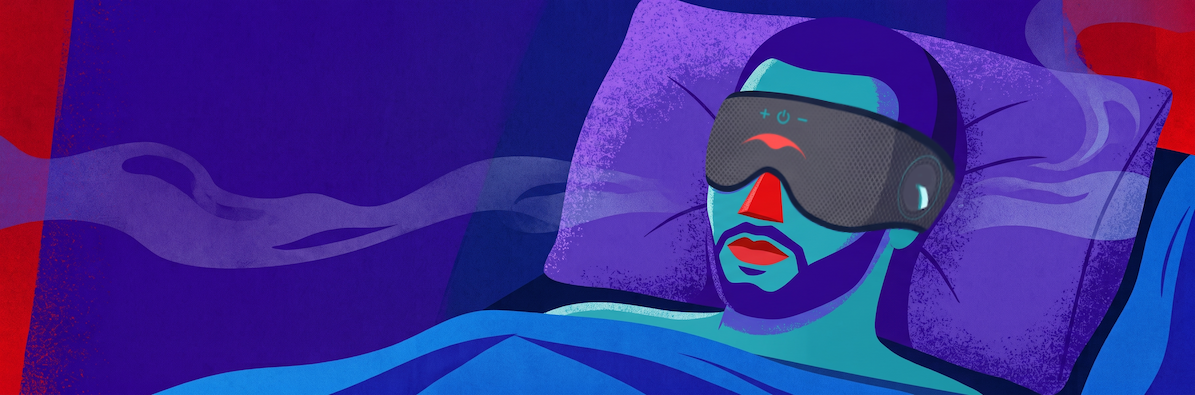
If you're craving sleep but are overstimulated, remember: Light first, because it's the cheapest and most complete step. Then sound. Then anything touching your skin. Then removing heat, which comes last, but getting it wrong can undo the rest.
If ordinary noise and light feel unbearable at night, it's not a character flaw. It's a filtering difference, and unlike a personality trait, it can respond to changing your environment.
Start with the channel that has the biggest return for the least effort. Manta SOUND Sleep Mask blocks light and sound in one go. If sound is your main problem, earplugs are a good first step.
Frequently Asked Questions About Sensory Overload
What Are the Signs of Sensory Overload Before Bed?
Common signs include sudden irritation at small sounds and an abrupt need to be left alone. Other symptoms include bedding or clothing feeling unbearable, or light seeming painfully bright. Some people experience a sensory shutdown, going quiet or blank rather than visibly upset. If your day feels fine and your evening doesn't, sensory load is a likely explanation.
Why Am I Tired but Cannot Sleep After Sensory Overload?
Tiredness and sleepiness aren't the same thing. Sensory overload raises your arousal level, and high arousal makes it difficult to fall asleep even as fatigue builds. That mismatch is the tired but wired feeling. Lowering input, rather than trying harder to relax, lowers arousal.
How Do I Sleep After an Overstimulating Day?
Start 30 minutes before you want to be asleep and remove inputs in order: light, then sound, then anything touching your skin and then heat. Each step gives your body one clear signal instead of several mixed ones. If 30 minutes isn't enough time, extend it to 60 minutes.
Does Sensory Overload Cause Insomnia?
A review published in the Journal of Sleep Research links higher sensitivity to environmental stimuli with more severe insomnia symptoms.(1) The link appears to run through sleep reactivity, meaning how easily your sleep gets disrupted. It's an association rather than a proven cause. If insomnia persists for weeks, discuss it with a clinician.
Is White Noise or Silence Better for Sensory Overload?
It depends on your room. If your space is genuinely quiet, silence is best. However, not everyone handles silence well. If the room has unpredictable background noise, masking usually wins. Sudden contrast can disrupt sleep more than steady sound does. Partial quiet is the least helpful option.
Sources:
(1) Dressle, R. J., & Riemann, D. "Hyperarousal in Insomnia Disorder: Current Evidence and Potential Mechanisms." Journal of Sleep Research, onlinelibrary.wiley.com/doi/full/10.1111/jsr.13928. Accessed 25 July 2026.
(2) Costa-Lopez, B., Ruiz-Robledillo, N., Moreno, O., et al. "Sensory Processing Sensitivity as a Predictor of Health-Related Quality of Life Outcomes via Stress and Sleep Quality." Scientific Reports, nature.com/articles/s41598-024-72657-9. Accessed 25 July 2026.
(3) Gooley, J. J., Chamberlain, K., Smith, K. A., Khalsa, S. B. S., Rajaratnam, S. M. W., Van Reen, E., Zeitzer, J. M., Czeisler, C. A., & Lockley, S. W. “Exposure to room light before bedtime suppresses melatonin onset and shortens melatonin duration in humans.” The Journal of Clinical Endocrinology & Metabolism, pubmed.ncbi.nlm.nih.gov/21193540. Accessed 25 July 2026.
(4) Halperin, D. “Environmental noise and sleep disturbances: A threat to health?” Sleep Science, sciencedirect.com/science/article/pii/S1984006314000601. Accessed 25 July 2026.
(5) Pieroni, I., Raffone, A., & Simione, L. “Sleep Reactivity Mediates the Relationship Between Sensory-Processing Sensitivity and Insomnia Symptoms Severity: A Cross-Sectional Correlational Study.” Stress and Health, onlinelibrary.wiley.com/doi/full/10.1002/smi.3297. Accessed 25 July 2026.
(6) Bahcecioglu Turan, G., Gürcan, F., & Özer, Z. "The Effects of Eye Masks and Earplugs on Sleep Quality, Anxiety, Fear, and Vital Signs in Patients in an Intensive Care Unit: A Randomised Controlled Study.” Journal of Sleep Research, onlinelibrary.wiley.com/doi/10.1111/jsr.14044. Accessed 25 July 2026.
(7) Greco, V., Bergamo, D., Cuoccio, P., Konkoly, K. R., Munoz Lombardo, K., & Lewis, P. A. “Wearing an Eye Mask During Sleep Improves Episodic Learning and Alertness.” SLEEP, academic.oup.com/sleep/article/46/3/zsac305/6912219. Accessed 25 July 2026.
(8) Qu, Z., Sun, X., Zhang, X., Yin, J., Zhang, X., Zhao, H., & Zhang, H. "The Effects of Sensory Stimulation Therapy in Patients With Sleep Disorders: A Scoping Review." Frontiers in Neuroscience, frontiersin.org/journals/neuroscience/articles/10.3389/fnins.2025.1682267/full. Accessed 25 July 2026.
Disclaimer: The information contained in this website or provided through our blog, e-mails, or programs is for informational purposes only. It is not intended to be a substitute for medical advice, diagnosis or treatment that can be provided by your healthcare professionals.