


How to Use Manta Sleep Earplugs: A Comprehensive Guide

There isn’t a day that noise, in one form or another, doesn’t inundate you. Sometimes noise is tolerable, but it can also be jarring and annoying. And if there’s one thing that noise can rob anyone of, it’s deep and restful sleep. A simple and cost-effective option is earplugs.
We’re proud to call Manta Sleep Earplugs “the most comfortable sleep earplugs on the planet.” We tested them against leading brands, and users rated them #1 for overall and side-sleep comfort.
This comprehensive guide will introduce you to our earplugs and show you how to use them to improve sleep.
Let’s get started.
Table of Contents
How Do Earplugs Work?
Earplugs are devices that you insert into your ear canal to reduce noise. They’re the most convenient noise solution because they’re small enough to take with you anywhere and use anytime.
Earplugs have several benefits, including reducing ambient noise from, say, live concerts. They even help you block sounds that can be a pain when you’re trying to focus. They also offer hearing protection from excessively loud noise, such as gunfire or heavy machinery. Swimmers also use them to prevent water from entering their ears.
They can also help with specific sound sensitivities, such as tinnitus, misophonia or hyperacusis. However, unnecessarily relying on them can make you more sensitive to noise. If you want to use earplugs for your sound sensitivity, make sure to consult your healthcare provider first.
And of course, they’re effective at blocking disruptive noise for light sleepers, so they fall asleep faster and stay asleep longer. Fewer sleep interruptions help you stay in the deeper, more restorative sleep stages longer, boosting sleep quality. They’re safer than sleep medications, too.
There are several types of earplugs, classified by their noise reduction rating (NRR) and material. The best earplugs for sleeping should have a light to moderate NRR of 14 to 25 decibels (dB). Meanwhile, a higher NRR is more suitable for reducing louder noises.
Earplugs are typically made from wax, silicone or foam. They’re available in disposable or reusable options. Some earplugs are made from a combination of materials, such as Manta Earplugs, which are reusable and crafted from both silicone and foam.
You shouldn’t wear earplugs if you’re prone to ear infections or experience earwax buildup. You should also avoid earplugs if you’ve recently undergone ear surgery.
What Are Manta Sleep Earplugs?
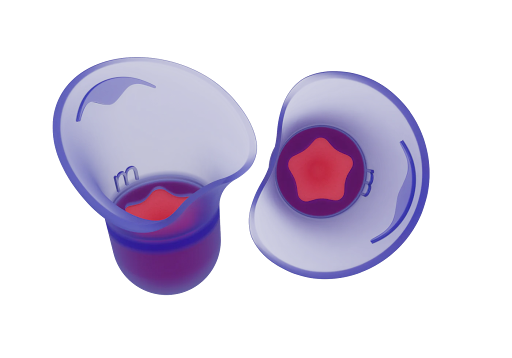
Manta Sleep Earplugs are designed to provide comfort and reduce noise, unlike other earplugs that usually sacrifice one for the other. We specifically designed them for sleep, especially for side sleeping.
Let’s explore their features:
-
Zero pain and pressure even while side sleeping
-
Suitable for all-night wear, featuring an inward curve that fits the contour of your ear and an outer flare that provides an additional seal
-
Comes in a set of five different sizes: XS, S, M, L and XL
-
Inner foam core absorbs sound
-
Skin-safe materials: food-grade silicone and memory foam
-
The ultra-thin silicone exterior has a barely-there feel
-
Comes with a transparent storage case to keep your earplugs fresh and dirt-free
-
Reusable up to a year of nightly use
-
Easy to clean
We also designed them to have a moderate NRR of 14 dB to help you hear emergency alerts, such as your burglar alarm, fire alarm or your crying infant.
How Do You Use Manta Sleep Earplugs?
Manta Sleep Earplugs are super easy to use. However, proper sizing and insertion are essential to create a comfortable, effective seal against noise. This guide will help you do just that.
Step 1: Familiarize Yourself With the Earplugs
Before anything else, let’s take a more detailed look at Manta Sleep Earplugs and what to expect.
-
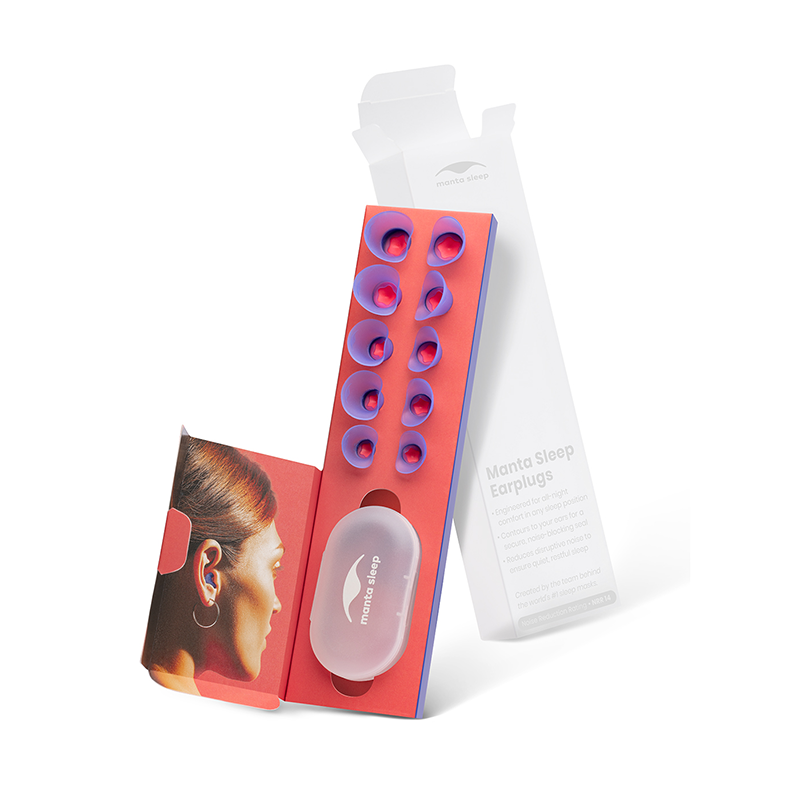
The set comes with five pairs of earplugs, each one sized differently: XS, S, M, L and XL.
-
The earplugs come with a transparent oval case for storage.
-
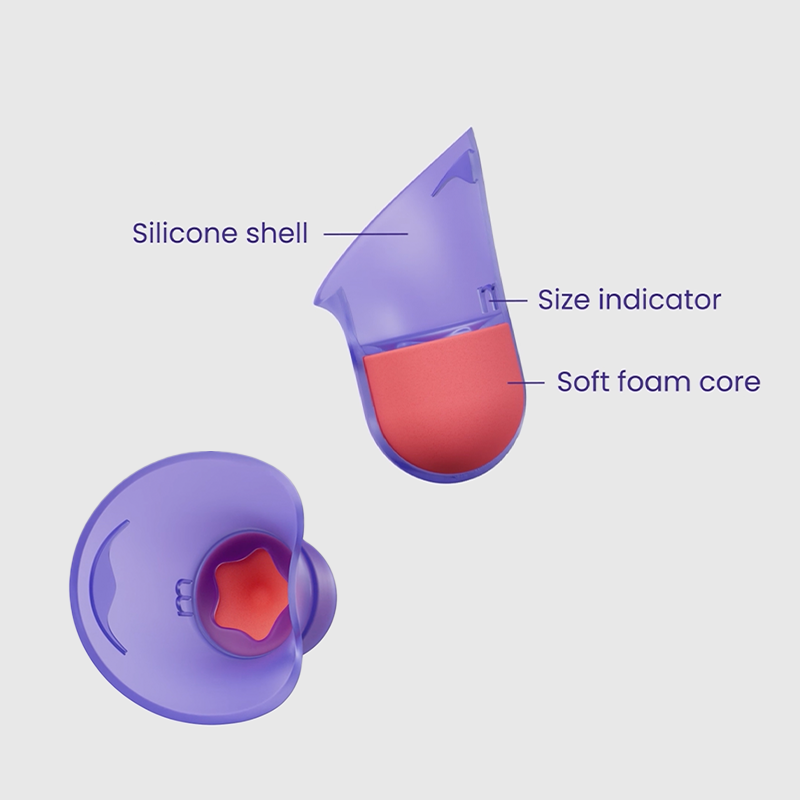
Each earplug has a size indicator.
-
The earplugs have a purple silicone shell exterior and a red inner memory foam core.
-
The silicone shell of each earplug has a longer tip, which also serves as a guide for proper insertion.
Step 2: Insert the Earplugs
We recommend trying on each of the five sizes to find the perfect fit. Start by identifying the size of earplugs that look like they will fit you best, and make sure your hands are clean before inserting them.
-
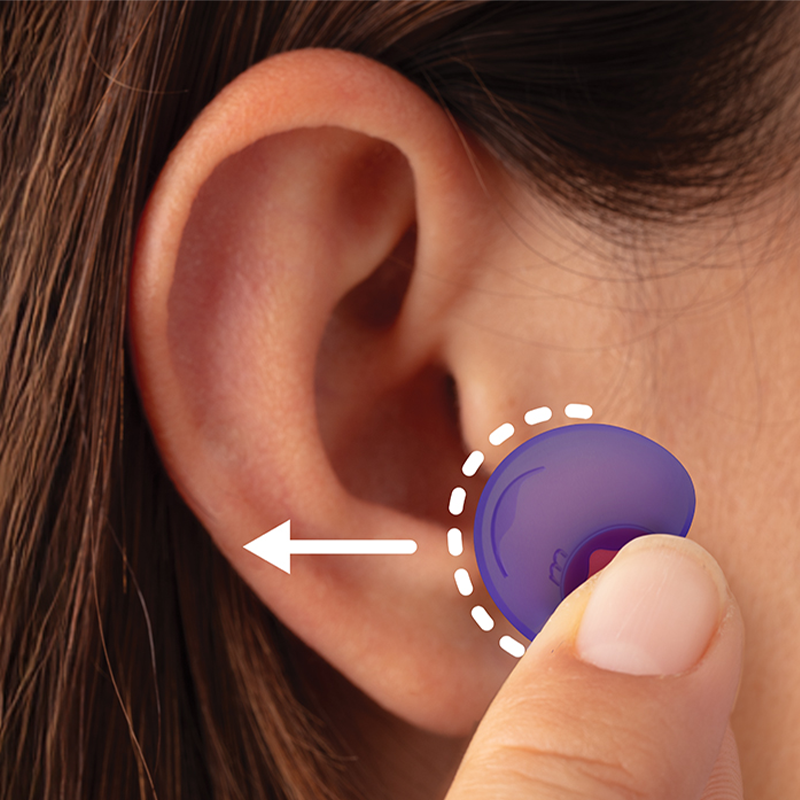
Locate the longer side of the earplug’s silicone shell exterior.
-
Position it so that this longer side points towards the back of your head.
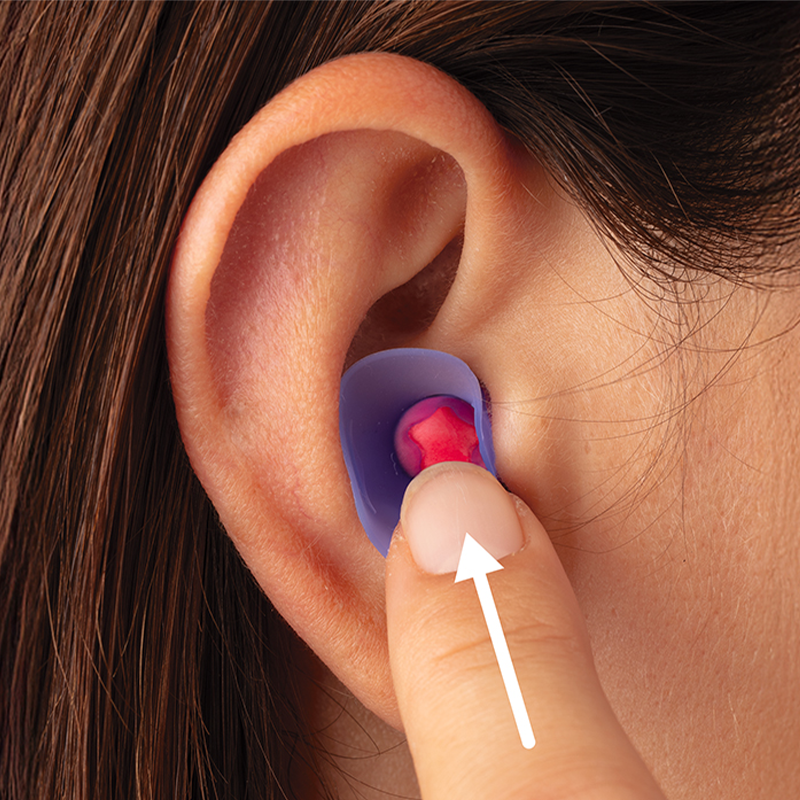
-
Seat the earplug into the opening of your ear canal.
-
Make sure that the longer side is still pointing towards the back of your head.
-
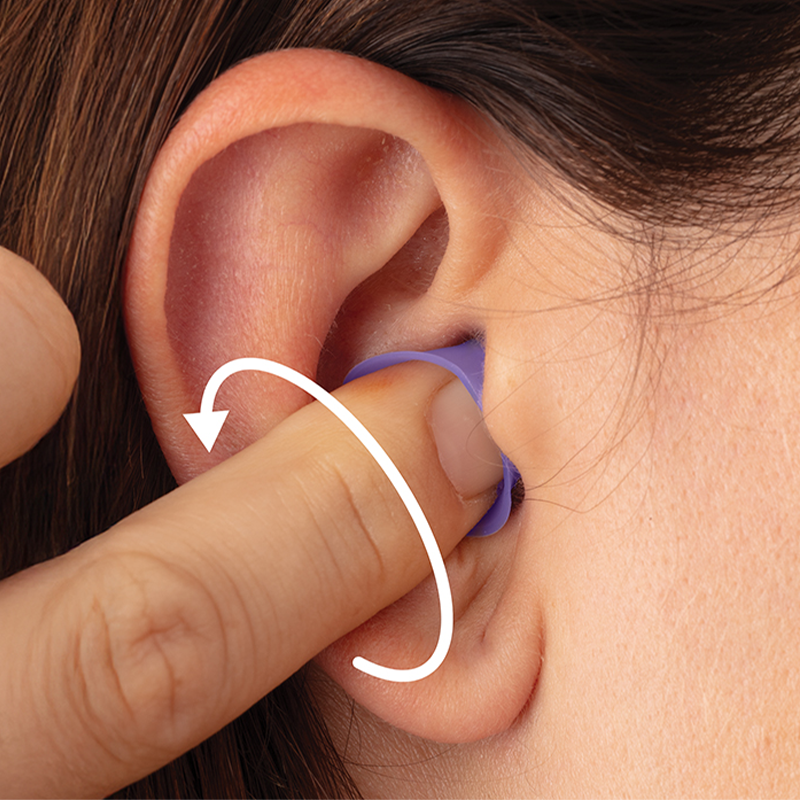
Gently push the earplug inward, using your index finger.
-
Seat the earplug correctly and create a good seal by twisting it into your ear.
-
Keep doing so until the earplug is snugly (but not uncomfortably) fitted into your ear.
-
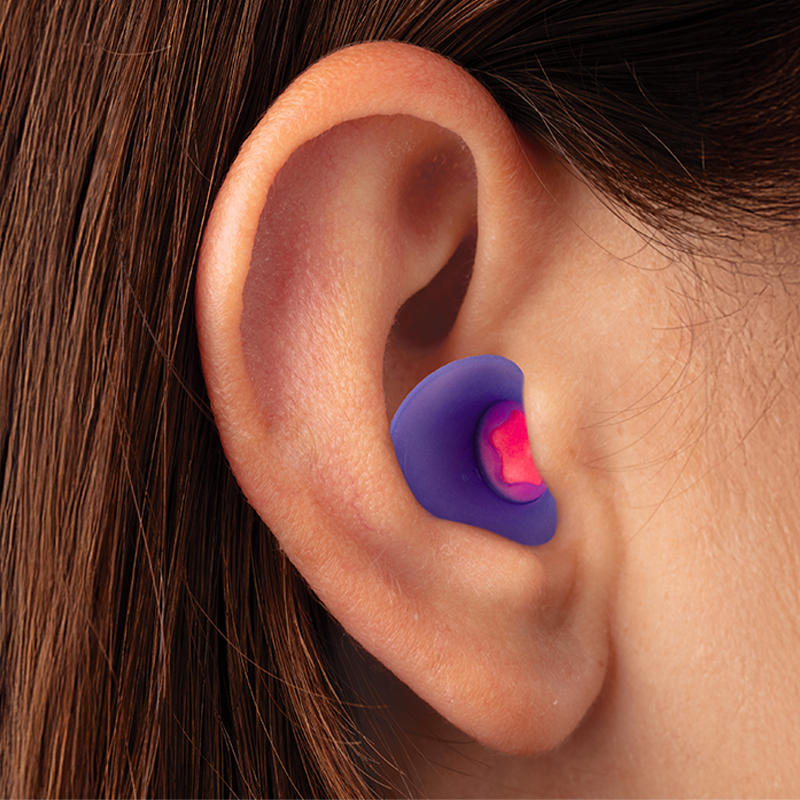
Examine the position of the earplug by looking in the mirror.
-
Check that the flat outer surface of the earplug is resting against your outer ear.
-
You should feel a seal inside your ear canal.
Step 3: Determine If You’ve Found the Correct Size
Here’s how to know that you’re wearing the correct size of earplugs:
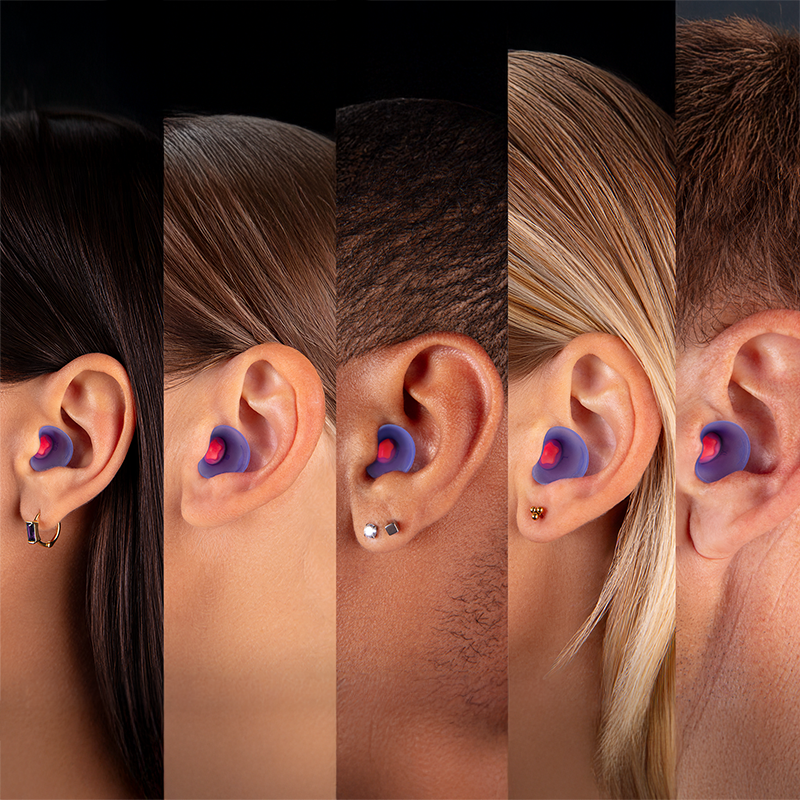
Since ear canals aren't always identical, different sizes may be required for each side.
-
The right-sized earplugs should feel comfortably snug.
-
They shouldn’t fall out when you move your head from side to side.
-
You should feel no pinching or pressure.
-
They should noticeably reduce noise.
-
They shouldn’t protrude from your ears regardless of your sleep position. This is especially true if you sleep on your side, as protruding earplugs will cause discomfort.
-
They shouldn’t be inserted too deeply. If they are, you are using a size that is too small.
How to Safely Remove Manta Sleep Earplugs
Now that you know how to insert Manta Earplugs, it’s essential to learn how to remove them. Here are some guidelines to note:
-
Gently pinch the silicone shell exterior with your fingertips. Then, pull the earplugs outward, using a twisting motion.
-
If you feel any resistance, don’t force it. Instead, continue rotating the earplug while pulling to break the seal, then remove the earplug completely. This process not only ensures the safe removal of the earplugs but also helps preserve their shape.
-
Once removed, check the earplugs for earwax or debris and clean them.
How to Maintain Your Manta Sleep Earplugs
Manta Sleep Earplugs last for up to 12 months, with nightly use. However, maintaining and storing them is crucial to ensure their long lifespan.
How to Clean Manta Sleep Earplugs
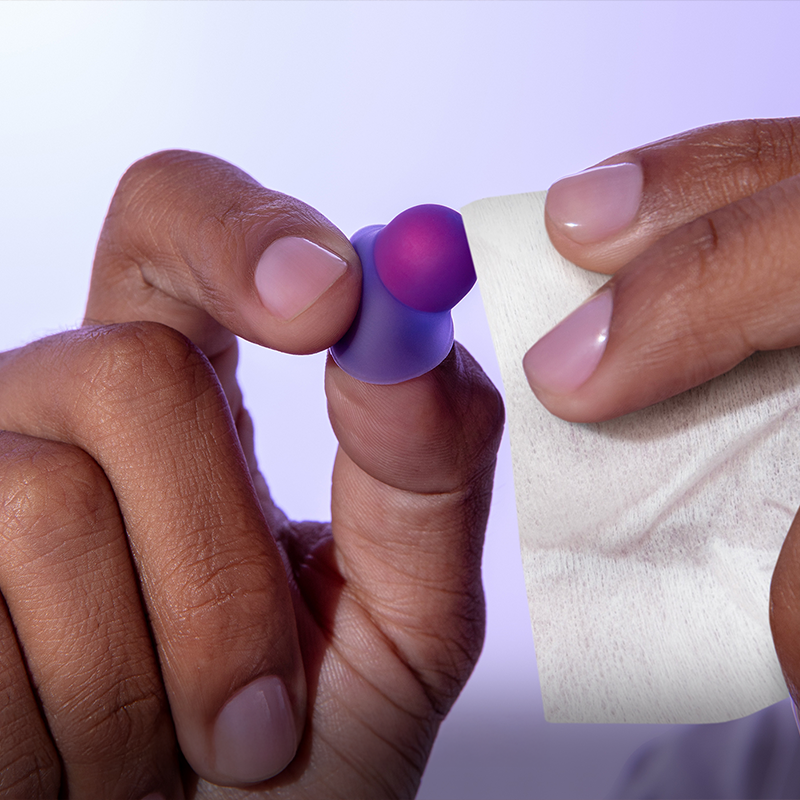
Here’s how to properly clean Manta Earplugs:
-
Dampen a soft cloth with isopropyl alcohol or any type of rubbing alcohol.
-
Gently wipe only the outer shell.
-
Air-dry them, then store them in the provided case.
-
Always ensure the case is clean before storing the earplugs in it. Clean it with an alcohol wipe. Make sure the case is completely dry before placing the earplugs inside.
Here’s what you shouldn’t do when cleaning your Manta Sleep Earplugs:
-
Never clean the earplugs with soap and water to avoid damaging their memory foam core.
-
Never submerge or soak the earplugs.
-
Avoid using harsh cleaners, baby wipes or makeup remover to clean the earplugs.
-
Do not store the earplugs until they are completely dry.
-
Do not use appliances such as blow dryers or other devices to hasten the drying process. The earplugs are strictly air-dry.
When to Replace Manta Sleep Earplugs
Manta Earplugs indeed last for up to a year with proper use and care. However, there are instances when you’ll need to replace them sooner.
Here’s when to replace them:
-
They lose shape or elasticity.
-
The silicone stiffens.
-
There are visible cracks or other damage.
-
They’re no longer effective at blocking noise.
-
They feel different when in your ear.
It’s essential to check your earplugs regularly for any of these signs.
How to Get Used to Sleeping With Manta Earplugs
In general, it takes time and patience to fully get accustomed to wearing earplugs at night.
You are essentially putting foreign objects in your ear canals, and that can be uncomfortable the first few times. That’s why we engineered Manta Earplugs to have a barely-there feel.
Here are some tips to help you get used to sleeping with Manta Earplugs:
-
Don’t panic if you all of a sudden become more aware of your own breathing or heartbeat. This heightened awareness of the sounds your body makes is normal while wearing any type of earplugs. It usually subsides after a few nights of use.
-
Start slow. Try wearing your earplugs for shorter sessions, such as when you’re reading, studying, or working. (Remember that wearing earplugs can help you focus.) You can gradually transition into all-night wear once you’re used to the feel of the earplugs.
-
If you still hear sounds while wearing Manta Sleep Earplugs, keep in mind that we designed them to reduce noise and not block it out entirely. It’s an important safety consideration that allows you to hear emergency alerts, and a practical one that lets you hear your alarm.
Troubleshooting Common Earplugs Issues
There may be instances where the earplugs fall out while you’re asleep. There may also be times when they seem to be ineffective at reducing noise. You might also experience pain or discomfort while side sleeping. Before you give up, keep in mind that some adjustments can make a world of difference.
The Earplugs Fall Out While Sleeping
If your earplugs fall out while you’re asleep, the first thing you should do is to make sure your ears are dry and clean before attempting to insert the earplugs again.
Remember to insert them with the longer curve of the outer shell pointing towards the back of your head and using the twist technique. Also, ensure that the silicone shell is tucked under the pointed cartilage at the front of your ear. If your earplugs continue to fall out, try going up one size.
There’s Insufficient or No Noise Reduction
We mentioned earlier that Manta Earplugs weren’t designed to eliminate noise, so you should still hear some sounds.
However, if they aren’t reducing noise at all, you can remove them and reinsert them, ensuring you do so correctly and that they have a good seal. If this still doesn’t work, it might be due to incorrect sizing. Experiment with the next largest size to see if there is an improvement.
You Feel Pain or Discomfort While Side Sleeping
One of the issues we wanted to address when designing our product was the discomfort of using earplugs while side sleeping. That’s why our earplugs have an ultra-thin silicone exterior for a barely-there feel, while the memory foam core is soft and adaptive, creating an effective seal.
If you are feeling pain or discomfort while side sleeping, remove it and reinsert it again using the proper twist technique. You should also be mindful that the earplugs aren’t protruding from your ears.
The discomfort could also be due to incorrect sizing. Try using a smaller size to see if that helps.
You Can Still Hear Your Partner’s Snoring
The best earplugs for snoring are those that muffle snoring without eliminating the sound of safety alerts or alarm clocks. If you can still hear your partner’s snoring while using Manta Earplugs, remove and reinsert them.
Check that you are inserting them properly, so they don’t protrude. Remember to ensure that the longer tip of the silicone exterior is pointing toward the back of your head, then gently twist them so they fit comfortably in your ear canal. You may also want to try a larger size for a more complete seal.
How to Get the Best Sleep With Manta Earplugs

Combining earplugs with other sleep accessories and strategies can take your sleep quality to the next level.
Here are a few tips to make the most of your Manta Earplugs:
-
Pair your earplugs with a 100% blackout sleep mask to keep out both sound and light.
-
Transform your bedroom into the best sleeping environment by keeping it dark, cool and quiet.
-
Practice good sleep hygiene, such as sticking to a consistent sleep schedule, crafting a relaxing bedtime routine, and avoiding caffeine and alcohol close to bedtime. Also, stop looking at screens at least 2 hours before bed.
-
Take your earplugs with you when you travel. Consider packing several sizes, and don’t forget the storage case and alcohol wipes.
Manta Sleep Earplugs Customer Reviews and Testimonials
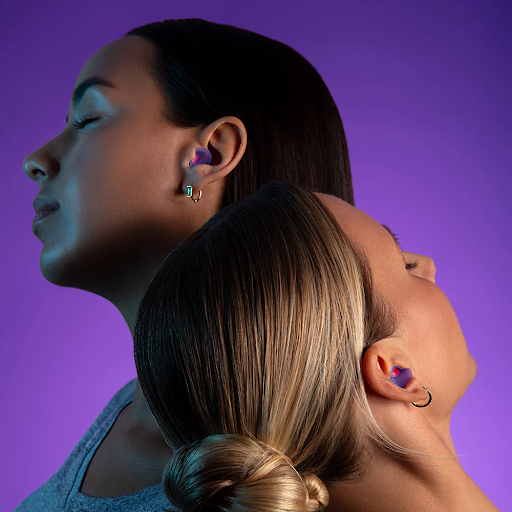
Manta Sleep Earplugs are a practical and effective must-have for your sleep tool kit, but don’t take our word for it.
Find out what our customers have to say:
⭐️⭐️⭐️⭐️⭐️
No more snoring!
“My husband is a snorer, so I've been trying a bunch of earplugs lately. These are by far the most comfortable ones I've used. Finally got a full night of sleep! 🙌” – Hannah G.
⭐️⭐️⭐️⭐️⭐️
5 Stars
“I love these! Not only do they block out sound incredibly well, but they’re also the only earplugs I’ve found that stay comfortable while side-sleeping. They don’t slowly work their way deeper into my ear during the night, so I’m not waking up with that temporary muffled hearing anymore. Absolutely worth it.” – Andrew
⭐️⭐️⭐️⭐️⭐️
Great fit
“The design really makes these fit perfectly, not too tight but just enough to block noise. My house is right next to a busy road and these have really helped blocking out that noise in the morning.” – Joseph B.
⭐️⭐️⭐️⭐️⭐️
Still fresh after weeks
“I've used foam earplugs before and I don't like how yucky they can get. It just never felt very hygienic. The silicone 'shell' of these Manta Earplugs is easy to clean and it stays fresh. Been using them for 2 weeks now and still as good as new. Plus, it feels really good too! Very soft.” – Carlos D.
⭐️⭐️⭐️⭐️⭐️
Replacing my old ear plugs for every night
"Quick review summary: These are now replacing my dream loops. These are much more comfortable to sleep in and the seal doesn't loosen like my dream does sometimes. I have been using them since Friday. I ended up using a large but probably could just use m as well. My main reason to wear some kind of ear plugs is to remove background noise from my CPAP machine, air purifier and furnace. I still can hear my air purifier a bit but not enough to bother me and my CPAP is completely cut. With dreams everything is cut but with only 14db nnr I was impressed because it seems better than others with higher nnr. I did notice if you don't follow the directions to twist them once in, you won't get as much reduction in sound." – Tia
⭐️⭐️⭐️⭐️⭐️
The best earplugs!
“These earplugs are exactly what I was looking for! They are soft and comfortable, I can even sleep on my side with them. My favorite part is they allow enough sound in that I can hear alarms or my kids if they need me, but they filter all that irritating background noise that wakes me up at night. Being sent the full set to find my perfect size was so helpful too, the ones I thought would fit didn’t end up being the right ones for me, and with this system I didn’t have to wait for a new pair to arrive. So smart! I’ve also been reaching for these during the day when I’m feeling overstimulated, they are so much more comfortable than the other filtering earplugs I had been using. 10/10, I’ve been recommending these to EVERYONE!” – Shannon P.
⭐️⭐️⭐️⭐️⭐️
Finally comfortable earplugs!
“These Manta earplugs are amazing! No pressure on my ears, even when I sleep on my side. Super comfy and they actually stay put all night. 10/10!” – Sarah L.
Conclusion
Earplugs are an easy and effective way to reduce disruptive noise so you can drift off faster and stay asleep longer. They’re handy for protecting your ears from excessively loud sounds. Plus, they help you stay focused when the world around you is making all that racket.
We hope this guide answered everything you wanted to know about Manta Sleep Earplugs. If you have questions that were left unanswered, visit our FAQs page, email support@mantasleep.com, or click the red chat button in the bottom-right corner.
Frequently Asked Questions About Using Manta Sleep Earplugs
What Makes Manta Sleep Earplugs Different From Others on the Market?
Manta Sleep Earplugs are different from others on the market because they strike a balance between comfort and noise reduction, unlike others that sacrifice one for the other.
They offer zero pressure and pain for people who sleep on their sides, thanks to their ultra-thin silicone exterior and adaptive foam core that conforms to your ear shape. Other earplugs create painful pressure points, making side sleeping uncomfortable. The combination of materials also provides dual protection against noise.
Manta Sleep Earplugs stay in place all night with proper insertion, unlike other brands. They’re also easier to use compared to other earplugs: just push and twist. Other earplugs require a roll-and-wait process.
Manta Earplugs come in five different sizes for a guaranteed fit and all-night wear. These reusable earplugs are super easy to use and clean, too.
How Much Noise Do Manta Sleep Earplugs Block? What Is Their NRR?
Manta Sleep Earplugs have a Noise Reduction Rating (NRR) of 14 dB. We designed them to reduce noise without blocking out emergency alerts or alarms. The earplugs boast a guaranteed fit to create an effective seal against noise, such as snoring, loud neighbors, or traffic, without blocking out emergency alerts or alarms.
What Is the Signal-to-Noise Ratio (SNR) for Manta Sleep Earplugs?
Manta Sleep Earplugs have an approximate SNR of 20 to 24 dB, which is equivalent to their official NRR of 14 dB. SNR is the European equivalent of NRR, which is the American standard for measuring the maximum noise reduction earplugs can provide based on laboratory testing.
How Do I Make Sure My Manta Sleep Earplugs Block As Much Noise As Possible?
You can make sure your Manta Sleep Earplugs block as much noise as possible by choosing the correct size and inserting them properly. The size of earplugs you choose should feel comfortably snug to create an effective seal. They shouldn’t protrude from your ears either.
Will I Still Hear My Alarm or My Partner Snoring While Wearing Manta Sleep Earplugs?
Yes, you might still hear your alarm or your partner’s snoring while wearing Manta Sleep Earplugs, depending on how loud they are. The earplugs are designed to reduce noise, not eliminate it. However, many users report that the earplugs are effective at muffling or blocking out snoring.
If you’re concerned about missing your alarm, try testing the volume with the earplugs before using them to sleep.
Can the Inner Foam Core of Manta Sleep Earplugs Be Removed or Replaced?
No, the inner foam core of Manta Sleep Earplugs cannot be removed or replaced.
Are Manta Sleep Earplugs Safe for Sensitive Skin?
Yes, Manta Sleep Earplugs are safe for sensitive skin as they’re made from food-grade silicone. However, you should ensure that you don’t have existing allergies to foam or silicone to prevent irritation.
Can Children Use Manta Sleep Earplugs, or Are They for Adults Only?
No, Manta Sleep Earplugs cannot be used by children. They are designed for adults. In general, children can use child-sized earplugs with the recommendation of a healthcare provider.
Can I Clean the Earplugs With Wet Wipes?
You can clean the earplugs with wet wipes, provided they are alcohol-based. Any other type of wet wipes containing other cleaning agents is unsuitable for cleaning Manta Sleep Earplugs.
Are Manta Sleep Earplugs Reusable, and How Long Do They Last?
Yes, Manta Sleep Earplugs are reusable. They’re designed to last up to 12 months of nightly use, with proper maintenance.
Can I Order a Single Size or Bulk Packs in One Size?
No, you cannot order Manta Sleep Earplugs in a single size or in bulk packs of a single size at the moment. However, you can order two packs at once with the Manta Sleep Earplugs Twin Set.
Do Manta Sleep Earplugs Come With a Warranty?
Yes, Manta Sleep Earplugs come with a 6-month warranty. If you are unsatisfied with the quality or the product has a defect, contact us within 6 months, and we will replace the product. Note that we can only provide a replacement for the same product you ordered.
Disclaimer: The information contained in this website or provided through our blog, e-mails, or programs is for informational purposes only. It is not intended to be a substitute for medical advice, diagnosis or treatment that can be provided by your healthcare professionals.